Find beer bottle carrier for Beer, Wine, and Beverage
Source 30 beer bottle carrier options made from plastic or wood with customizable colors and logos. Buyers can compare specifications like model numbers, dimensions, and certifications including FDA and LFGB for various beverage packaging needs.
Key considerations
Products List





Comprehensive Sourcing Guide
Strategic Sourcing Guide for Beer Bottle Carriers
Understanding Material Composition and Structural Integrity
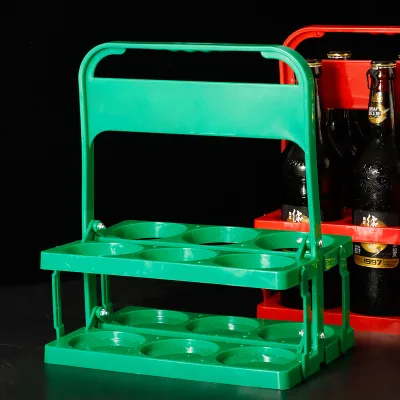
The foundation of a successful procurement strategy for beer bottle carriers begins with a rigorous analysis of material composition. In the current market, the supply landscape is bifurcated primarily between plastic and wood variants, each offering distinct advantages regarding durability, aesthetics, and environmental impact. Plastic carriers, often cited in product specifications as "High Quality," are prevalent due to their moldability and cost-effectiveness. These units are frequently designed with a "Modern" style, catering to contemporary branding needs while ensuring the structural integrity required to hold multiple beverage containers securely. The observed material data indicates that plastic carriers are available in various color profiles, including black, pink, white, green, and red, with options for custom colorization to align with specific brand identities.
Conversely, wooden carriers present a premium alternative, often marketed under specific product items such as "Wooden Carrier" or "Wooden Bottle Carrier." These units are characterized by a natural aesthetic that appeals to craft breweries and artisanal beverage producers. The weight specifications for wooden variants vary significantly, with observed data points indicating weights of 500g and 1000g depending on the model and dimensions. This variance suggests that buyers must carefully evaluate the load-bearing requirements of their specific bottle types. While plastic carriers often feature foldable designs to optimize logistics, wooden carriers typically offer a rigid, non-collapsible structure that emphasizes durability and a tactile premium feel. The choice between these materials is not merely aesthetic; it dictates the carrier's resistance to moisture, impact, and long-term wear in distribution channels.
Technical Specifications and Dimensional Standards
When evaluating technical specifications, precision is paramount to ensure the carrier fits the intended bottle geometry without compromising stability. The market offers a diverse range of model numbers, including specific identifiers such as 371, 197, 376, 372, 375, 196, and custom model codes like BOTTLE CARRIER-020, BOTTLE CARRIER-001, and BOTTLE CARRIER-011. These identifiers often correspond to specific dimensional standards. For instance, certain plastic models adhere to standardized dimensions of 284178320 mm, while others may follow a metric of 24.4×15.8×30cm. It is critical for buyers to verify that the internal cavity dimensions of the carrier match the diameter and height of their beer bottles, as a mismatch can lead to product damage during transit.
Furthermore, the "Custom" standard is a frequent attribute in this category, allowing for tailored dimensions to accommodate unique bottle shapes or multi-pack configurations. The foldability of plastic carriers, marked as "Yes" in several listings, introduces a logistical advantage by reducing the volume of empty carriers during return shipping or storage. However, wooden carriers generally do not share this foldable attribute, necessitating a different approach to storage and inventory management. Buyers should also note the packaging standards, which range from individual OPP bags combined with boxes and cartons to bulk carton packaging. Understanding these dimensional and packaging specifications is essential for calculating shipping costs and warehouse space requirements.
Compliance, Certification, and Food Safety Protocols
For products intended for food and beverage contact, such as beer bottle carriers, compliance with international food safety standards is non-negotiable. The supply chain data highlights the availability of carriers certified under FDA and LFGB standards. The LFGB (Lebensmittel- und Futtermittelgesetzbuch) is a German standard that is widely recognized for its stringent requirements regarding food contact materials, ensuring that the carrier does not leach harmful substances into the beverage or the environment. The presence of FDA certification further validates the product's suitability for the North American market, where regulatory compliance is strictly enforced.
Buyers must verify that the specific batch of carriers they intend to purchase carries these certifications. While the data indicates that FDA and LFGB certifications are available, it is the responsibility of the procurement team to request current test reports and certificates of compliance from the supplier before finalizing an order. Relying on general market availability without verifying the specific product's certification status can lead to regulatory violations and potential product recalls. Additionally, the material type plays a role in compliance; plastic carriers must be food-grade, while wooden carriers should be treated with non-toxic finishes to meet these same safety thresholds.
Cost Drivers, Pricing Structures, and MOQ Analysis
The financial landscape of sourcing beer bottle carriers is influenced by several key variables, including material costs, customization complexity, and order volume. The observed price range in the market spans from $0.02 to $280, a wide disparity that reflects the difference between mass-produced plastic units and premium, custom-engraved wooden carriers. The Minimum Order Quantity (MOQ) is another significant cost driver, with observed ranges extending from 4 units to 50,000 units. A standard MOQ of 500 PCS is frequently cited for plastic models, which may be prohibitive for small-scale startups but manageable for established distributors.
Customization is a primary factor that escalates costs. Options such as logo application via silk screen, heat transfer printing, or laser engraving add value but also increase the unit price. The data indicates a sample cost of 80 USD for customized wooden carriers, highlighting the premium nature of bespoke designs. Lead times also impact the total cost of ownership; bulk production times are observed at 30 days for wooden items and 35-45 days for other variants, with sample times ranging from 7 to 10 working days. Buyers should factor in these timelines when planning inventory to avoid stockouts. Payment terms, typically requiring 30% in advance with the balance before shipping, and price terms like EXW, FOB, and DDP, further influence the final landed cost and must be calculated into the budget.
Supplier Evaluation and Geographic Considerations
Identifying a reliable supplier requires a thorough vetting process that goes beyond the initial product listing. The geographic origin of the products is a critical indicator of supply chain logistics. The data points to major manufacturing hubs in China, specifically Jiangsu and Zhejiang provinces. Jiangsu is noted for producing carriers with specific model numbers and certifications, while Zhejiang is associated with wooden carriers and custom dimensions. Understanding the regional specialization can help buyers anticipate the quality of craftsmanship and the efficiency of the supply chain.
When evaluating suppliers, buyers should prioritize those who demonstrate transparency in their production capabilities. Key indicators of a trustworthy supplier include the availability of samples, clear communication regarding lead times, and a willingness to provide documentation for certifications. The "Sample Available" attribute is a crucial step in the evaluation process, allowing buyers to physically inspect the quality, finish, and fit of the carrier before committing to a bulk order. Additionally, the ability to provide a "Logo Draft" via silk screen or heat transfer printing demonstrates the supplier's technical proficiency in customization. Buyers should avoid suppliers who are vague about their production capacity or unwilling to share detailed specifications for their standard and custom models.
Quality Control and Long-Term Procurement Strategy
Ensuring consistent quality is the cornerstone of a sustainable procurement strategy. For beer bottle carriers, quality is defined by the structural integrity of the material, the precision of the molding or woodworking, and the durability of the branding. High-quality plastic carriers should be free from flash, warping, or weak points that could cause the carrier to break under the weight of the bottles. Wooden carriers must be inspected for splinters, uneven finishes, and secure joinery. The "High Quality" attribute observed in the market should be treated as a claim that requires verification through physical inspection and third-party testing.
Long-term procurement considerations involve building a relationship with suppliers who can scale with the buyer's growth. This includes the ability to maintain consistent quality across different production batches and the flexibility to adjust order volumes as market demand fluctuates. The availability of custom dimensions and colors allows for brand differentiation, but it also requires a robust quality control process to ensure that custom orders meet the same standards as standard products. Buyers should establish clear quality acceptance criteria in their contracts, including tolerance levels for dimensions and weight, and define the process for handling defective goods. By focusing on these long-term factors, buyers can secure a reliable supply of beer bottle carriers that support their brand reputation and operational efficiency.
Application Scenarios and Market Versatility
The versatility of beer bottle carriers extends across various application scenarios, from retail distribution to promotional events and corporate gifting. The primary usage is identified as "for Beer, Wine, Beverage," indicating that these carriers are designed to handle a range of liquid containers. The "Modern" style and foldable nature of plastic carriers make them ideal for retail environments where space efficiency and aesthetic appeal are critical. These carriers can be easily stacked and stored, reducing the footprint in warehouses and retail shelves.
Wooden carriers, with their premium weight and natural finish, are often utilized for high-end craft beers, gift sets, and special edition releases. The ability to apply logos via laser engraving or silkscreen printing allows for a sophisticated branding experience that resonates with consumers seeking a premium product. The "Custom" standard and various model numbers suggest that these carriers can be adapted for different pack sizes, from two-bottle carriers to six-packs or larger configurations. Understanding the specific application scenario helps buyers select the right material and design to maximize the impact of their product presentation. Whether for mass-market distribution or niche marketing, the right carrier choice enhances the overall consumer experience and protects the product during transit.
FAQs
What certifications are available for food-safe beer bottle carriers?
Carriers are available with FDA and LFGB certifications to ensure food safety. These standards verify that materials do not leach harmful substances, making them suitable for beer and wine contact. Buyers should request current test reports to confirm specific batch compliance before ordering.
Which materials are used for beer bottle carriers in this market?
The market offers carriers made from both plastic and wood. Plastic options are often foldable and available in modern styles, while wooden variants provide a premium feel with weights ranging from 500g to 1000g. The choice depends on the desired durability and aesthetic for the beverage brand.
How long does it take to receive samples for custom carriers?
Sample times typically range from 7 to 10 working days depending on the material and customization level. Customized wooden carriers may require specific sample fees, such as 80 USD, before production begins. This lead time allows buyers to verify quality and fit before committing to bulk orders.
Can buyers customize the logo on beer bottle carriers?
Yes, logo customization is available through silk screen printing, heat transfer, or laser engraving. Plastic carriers often support color customization in black, pink, white, green, or red. Wooden carriers may use silkscreen or laser engraving to apply branding directly onto the surface for a premium finish.
What is the minimum order quantity for plastic beer bottle carriers?
A standard minimum order quantity of 500 pieces is frequently cited for plastic models. However, the observed market range extends from 4 to 50,000 units depending on the supplier and product type. Buyers should verify specific MOQs as they vary significantly between standard and custom configurations.
Where are these beer bottle carriers manufactured?
Manufacturing originates primarily from China, with specific hubs in Jiangsu and Zhejiang provinces. Jiangsu is noted for plastic carriers with specific model numbers, while Zhejiang is associated with wooden carriers and custom dimensions. This geographic concentration influences logistics and lead times for international buyers.